



A LEGO display shelf needs to do more than hold a finished set. It should give the model enough room to remain visible, support its weight safely and fit naturally into the room. The best shelf for a small helmet or minifigure collection may be unsuitable for a large Technic car, aircraft or Star Wars ship.
Before buying another bookcase or floating shelf, look at the models you own. Measure the widest, deepest and tallest parts, then consider how much space you want around each build. A carefully planned LEGO display shelf keeps the collection easier to view, clean and expand.
Start with the LEGO model, not the furniture
The first measurement should come from the finished LEGO model. Check the set at its widest, deepest and tallest points, including parts that extend beyond the main body.
- Wings and landing gear on aircraft
- Mirrors, spoilers and rear wings on cars
- Masts, sails and rigging on ships
- Antennas and satellite dishes
- Display stands and nameplates
- Raised details on LEGO Art sets
A model can fit on a shelf and still look cramped. Leave open space around the build so its silhouette remains easy to read from the normal viewing position.

| LEGO collection type | What the display needs most |
|---|---|
| Minifigures | Shallow depth, clear visibility and organized rows |
| Speed Champions | Long shelf space and consistent spacing |
| LEGO helmets | Moderate depth and dust protection |
| Technic supercars | Deep support and clearance for mirrors and wings |
| Modular buildings | Width, height and strong load support |
| Aircraft and ships | Wide shelves and clearance around projecting parts |
| LEGO Art sets | Stable backing, wall space and a clear viewing angle |
Measure shelf depth and viewing space
Shelf depth affects both fit and presentation. A shallow shelf may work for minifigures or small vehicles, but a large Technic car can extend over the edge or sit too close to the wall behind it.
Measure the usable depth from the back of the shelf to its front edge. Compare that measurement with the deepest part of the model and include the space needed to clean and remove it safely.
Width matters as well. A long shelf can hold several cars, but placing every model directly beside the next one can make the collection look crowded. Leave room between different builds so each model has a clear visual position.
Check weight and stability before filling the shelf
Large LEGO sets can become heavy, especially when several models share one shelving unit. Check the shelf rating, the total capacity of the furniture and the strength of the wall brackets before loading it.
For a wall-mounted shelf, confirm the wall type and anchor method. For a tall bookcase, consider anti-tip protection and keep the heaviest models on lower levels.
- Place heavier Technic cars and large ships on lower shelves.
- Keep lighter helmets and small vehicles higher up.
- Do not place heavy models above beds or seating areas.
- Check brackets and wall anchors before installation.
- Do not rely on a narrow shelf edge to support a deep model.
Choose the shelf style for your collection
Floating shelves for compact models
Floating shelves work well for helmets, Architecture sets, Botanicals, small Icons builds and compact vehicles. They save floor space and blend into bedrooms, offices and living rooms.
Their main limitation is depth. Measure the shelf carefully before placing a model with a wide base, long body or projecting accessories.
Long shelves for cars and repeated collections
Long wall shelves are useful when the collection looks strongest as a lineup. They work well for Speed Champions, LEGO F1 cars, Batmobiles and smaller Technic vehicles.
Use consistent spacing and keep the models facing the same direction. If the collection is still growing, leave part of the shelf open so new cars can be added without rearranging the entire row.
Cube shelving for small and medium builds
Cube shelving creates separate display zones for helmets, compact vehicles, minifigure cases and small dioramas. The fixed cube dimensions can become a problem for long cars, tall landmarks and deep scenes.
Adjustable bookcases for mixed collections
Adjustable shelving works better when your collection includes models of different sizes. You can create taller spaces for landmarks, wider gaps for statement sets and smaller sections for helmets or minifigures.
Use display cases when dust becomes the main problem
Open shelves are easy to access, but exposed LEGO models collect dust in studs, wheels, gaps and recessed details. Cleaning becomes more difficult as the number of displayed sets grows.
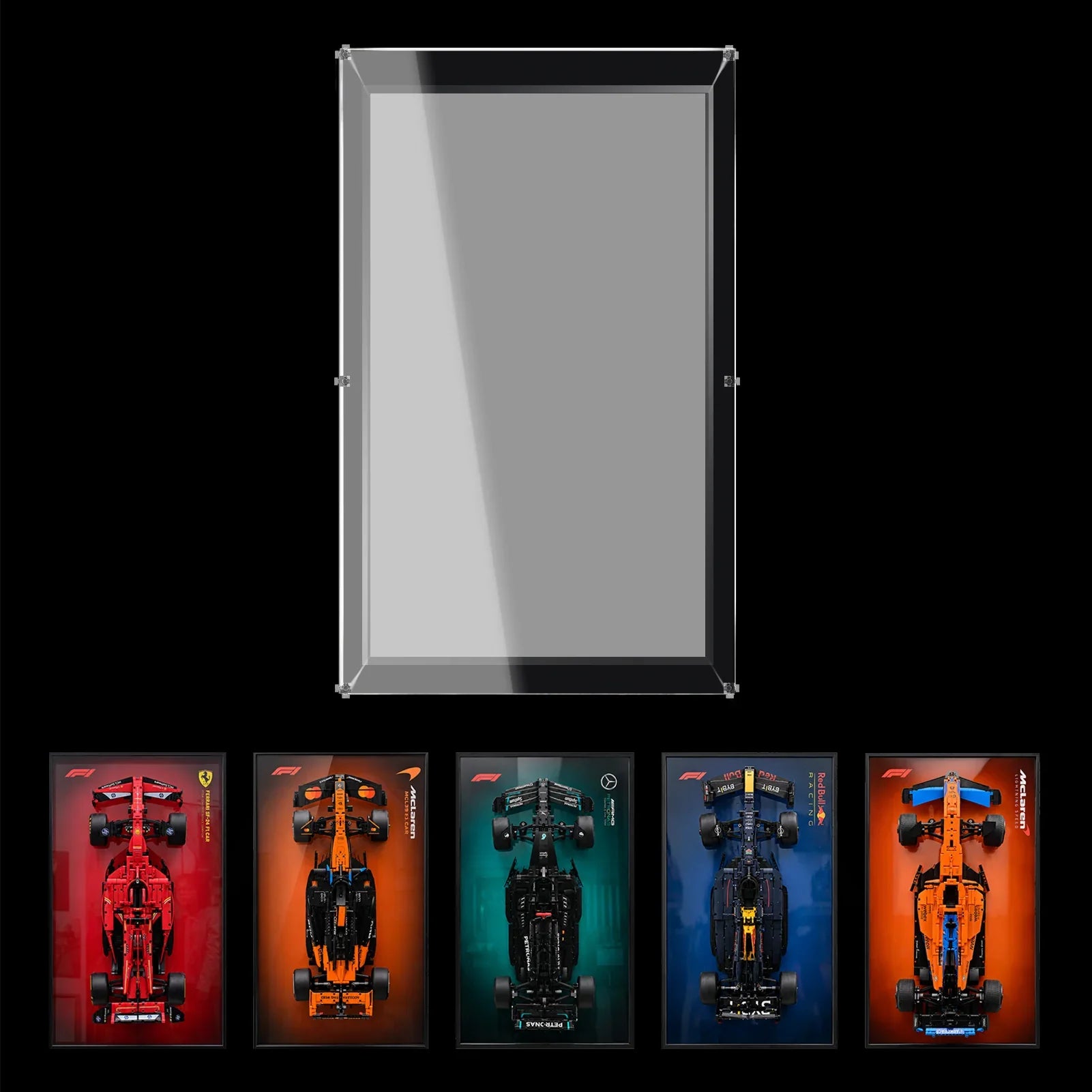
A dedicated acrylic case can protect an important model without requiring you to enclose the entire shelving system. This is useful for premium builds, difficult-to-clean models and sets that will remain in the same display position for a long time.
For example, the WETCEAOM six-tier minifigure display case provides organized vertical storage when a large minifigure collection would use too much shelf space.

Consider a wall display for large statement sets
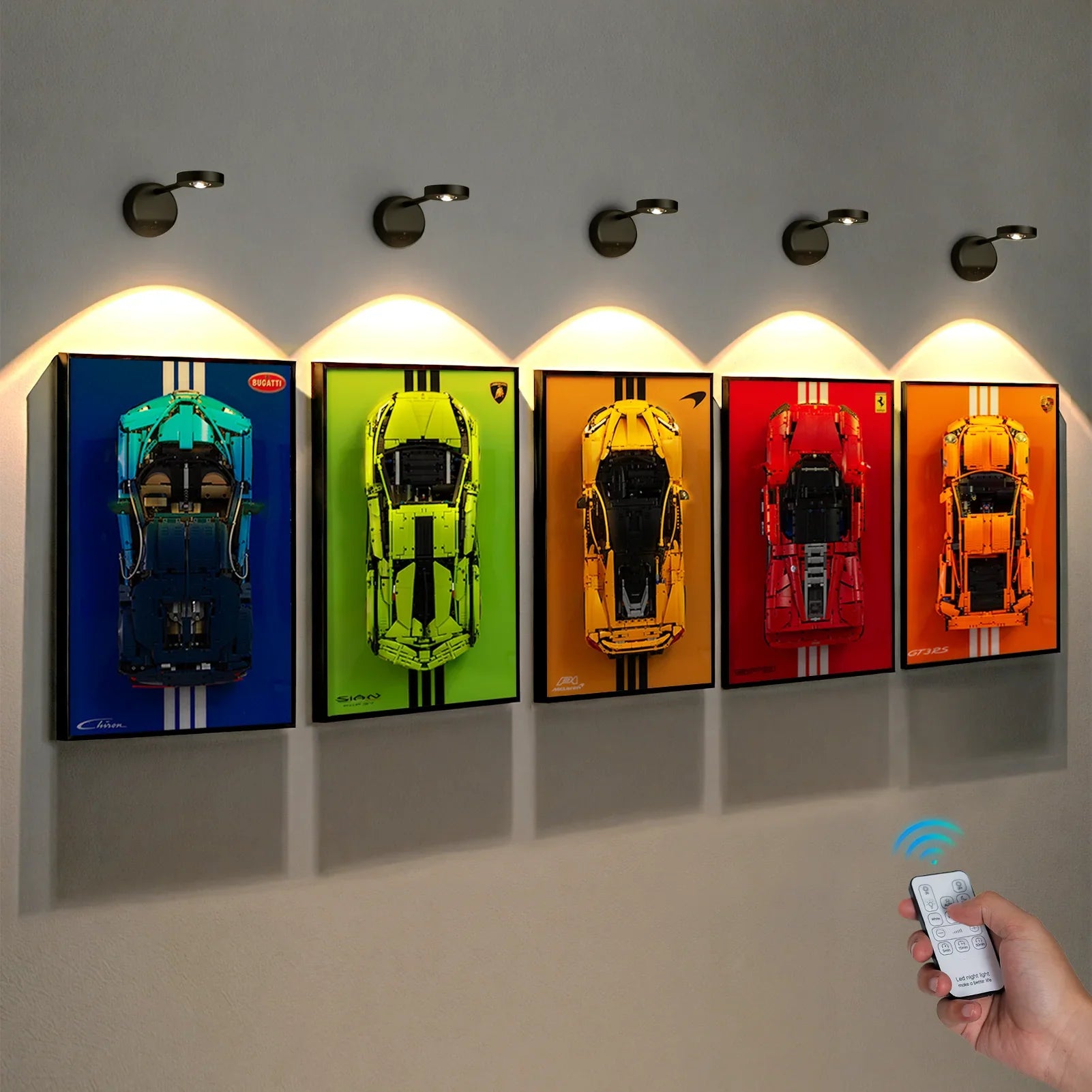
Some LEGO models use so much shelf depth that a wall display becomes more practical. A wall-mounted frame can free the surface below the model while keeping the build at eye level.
This approach works particularly well for large Technic cars, LEGO Art sets and wide vehicles that need a clear front view. The WETCEAOM Bugatti Chiron 42083 wall display frame is designed around the footprint and presentation of the Technic car.

Before mounting a wall display, mark the outside footprint with removable tape. Check the viewing height, furniture below the display, door swings, wall material and the space needed to access the model for cleaning.
Give LEGO Art enough wall space
LEGO Art sets are often displayed like framed artwork, but their raised brick surface still needs protection and a clear viewing line. A shelf can force the artwork to lean at an angle or place it behind other decor.
A wall-mounted acrylic display case gives the artwork a defined position while helping reduce dust exposure. Leave enough space around the artwork for the full outline to remain visible.

Plan lighting without creating glare
Lighting can make a LEGO display easier to appreciate, but the wrong position can create harsh reflections or visible LED dots on acrylic panels.
Under-shelf LED strips, diffused cabinet lighting and indirect backlighting usually create a more even result than a bright point light aimed directly at the model. Warm light suits classic cars, Architecture and vintage-inspired builds. Neutral or cooler light often works well for F1, Star Wars and modern vehicles.

Keep direct sunlight away from important models
A shelf beside a bright window may look attractive during the day, but prolonged direct sunlight can increase the risk of fading or discoloration over time. This is especially relevant for older white pieces, printed elements and light-colored bricks.
Choose a position away from strong afternoon sunlight where possible. If moving the display is difficult, an enclosed acrylic case can add another protective layer.
Leave room for the collection to grow
One of the most common display mistakes is filling every shelf on the first day. LEGO collections usually expand through new releases, gifts and second-hand finds.
Reserve some horizontal space, keep adjustable shelf positions available and leave room for future display cases. Collections such as F1, Speed Champions, Star Wars, minifigures and Technic supercars benefit from a display plan that can expand.
Use a simple display decision process
- Measure the finished model at its widest, deepest and tallest points.
- Check the weight and identify fragile or projecting parts.
- Measure the usable shelf or wall space.
- Decide whether open access or dust protection matters more.
- Test the normal viewing angle and lighting.
- Leave space for cleaning and future additions.
- Check the current WETCEAOM product dimensions before ordering a case or frame.
Final Thoughts
The right LEGO display shelf depends on the model, the room and the way you want to enjoy the collection. Small figures and compact vehicles can work well on shallow shelves, while large Technic cars, LEGO Art sets and detailed ships often need more depth, protection or a dedicated wall position.
Measure the finished build first, check the shelf support and plan the viewing angle before buying new furniture. When an open shelf no longer provides enough protection or space, a model-specific display case or wall-mounted frame can give an important build a clearer presentation.

