
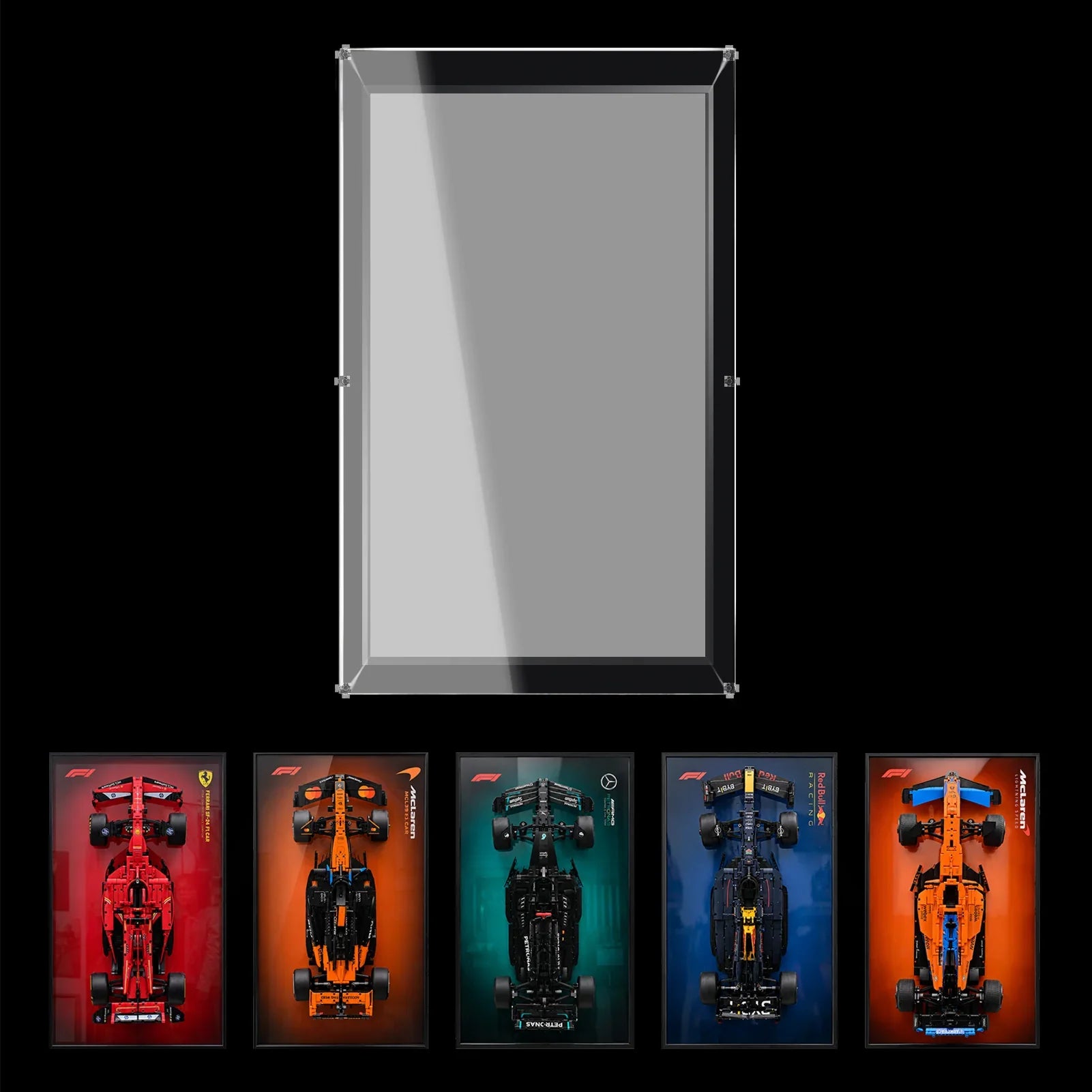

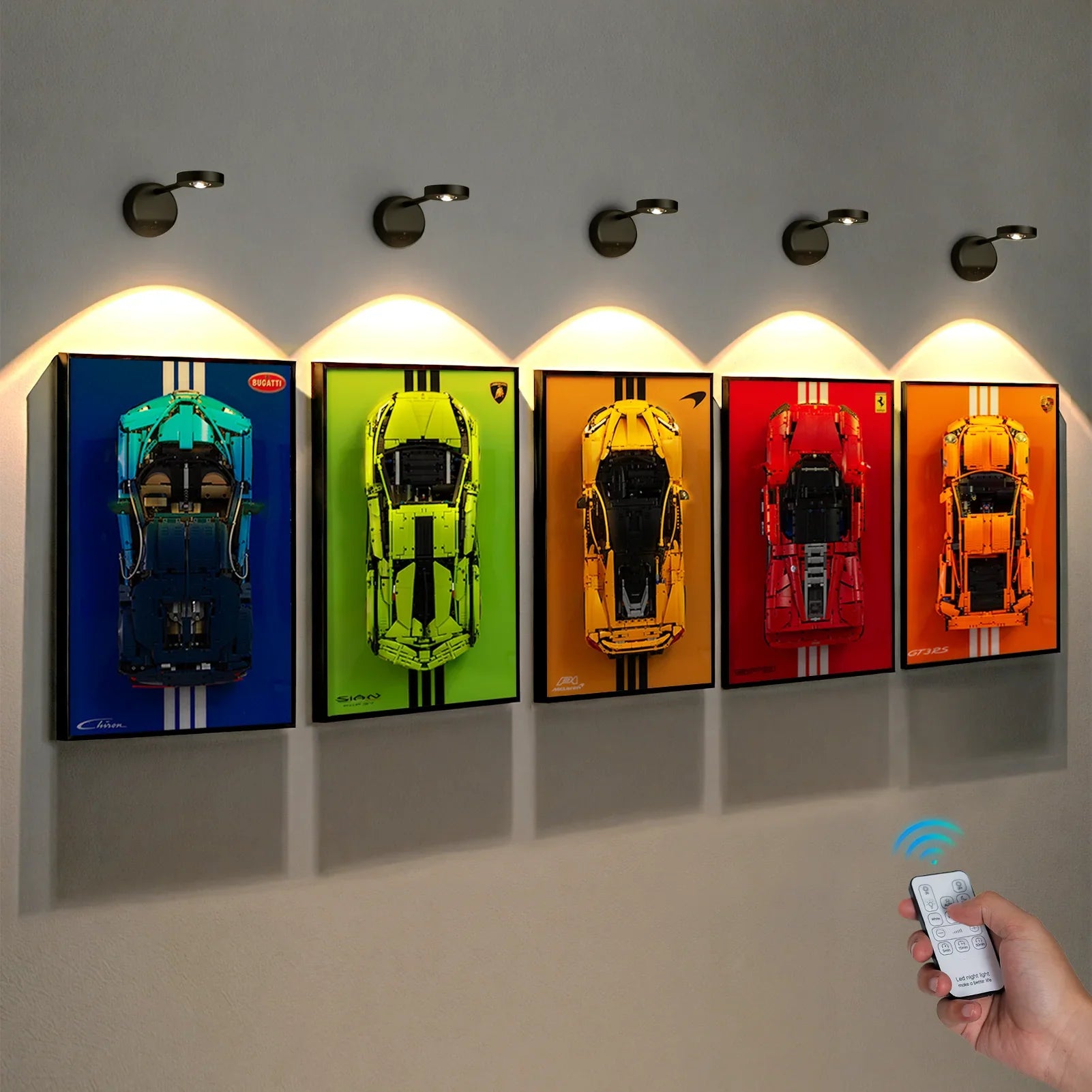


Finishing a LEGO® Icons Formula 1 car is only the first part of building an F1 collection. The next decision is where to display it. LEGO McLaren MP4/4 and Ayrton Senna 10330, Williams FW14B 10353 and Ferrari F2004 11375 each represent a different chapter of Formula 1 history, but their long bodies, exposed wheels and detailed rear sections can quickly take over a desk or shelf.
A dedicated LEGO F1 display case gives these legendary cars a consistent place in the room. Instead of placing each model between unrelated objects, you can arrange them as a unified display that makes the different liveries and racing eras easy to compare.

Why these three LEGO F1 cars work as one display
The 10330, 10353 and 11375 are different cars, but they share a similar display language. Each model has a long horizontal shape, open wheel areas and a strong team identity.
- 10330 McLaren MP4/4 and Ayrton Senna: a McLaren racing icon connected with Senna’s 1988 championship season.
- 10353 Williams FW14B: a highly recognizable Williams car associated with Nigel Mansell and the early 1990s.
- 11375 Ferrari F2004: a Ferrari F1 model representing Michael Schumacher’s dominant 2004 season.
Displayed separately, each model can look like another car on a shelf. Displayed together, they create a timeline of F1 design, engineering and team identity.
Choose a case that matches the car’s footprint

A standard shelf may be deep enough for one F1 car but still leave little room around the front wing, rear wing and tires. When several cars share one shelf, the models can become difficult to view and clean.
The WETCEAOM Universal F1 Display Case for LEGO® Icons 10330, 10353 and 11375 is listed at approximately 35 × 20 × 15 cm per case. The case is designed for the McLaren, Williams and Ferrari F1 models and is available as a three-piece option or as individual model-specific choices.
Before ordering, measure your completed car if you have added lighting, a custom stand or modified parts. The standard model configuration should be checked against the current product listing and the selected option.
Single case or three-piece display?
Choose one case for a single completed build
A single case works well if you have finished only one of the three F1 models or want to add the cars to an existing collection gradually. It gives the first model a protected position while leaving room to purchase matching cases later.
This option also suits collectors with limited shelf width. One case can sit on a desk, sideboard or display cabinet without requiring a full F1 wall immediately.
Choose the three-piece option for a unified lineup

The three-piece option is designed for collectors who want to display the McLaren, Williams and Ferrari together. Matching case sizes create a cleaner visual rhythm than mixing different boxes with different depths and panel styles.
Arrange the cars by season, driver or color. A chronological layout can show the development of Formula 1 design, while a color-based layout can create a stronger visual effect across the shelf.
Why clear acrylic works well for F1 models
Formula 1 cars contain details that are easy to lose on an open shelf. Front wings, suspension elements, sponsor graphics and rear wing structures can collect dust and become difficult to clean without disturbing the model.
The WETCEAOM case uses clear acrylic panels to keep the cars visible from the front and sides while helping reduce everyday dust exposure. The transparent construction keeps attention on the model’s livery rather than adding a heavy visual border.
The product listing also describes the cases as stackable, allowing collectors to build a more organized display when space is limited. Check the supplied instructions and the stability of your chosen surface before stacking cases.
Arrange the cars for a stronger visual result
The order of the cars changes the way the display feels. Use one of these simple layouts:

Chronological display
Place the models in racing history order. This layout works well for collectors who enjoy seeing how Formula 1 technology and body shapes changed across different eras.
Team color display
Place the cars according to their dominant colors. The red Ferrari, blue Williams and red-and-white McLaren create a clear visual pattern when viewed together.
Driver-focused display
Arrange the models around the drivers associated with them: Ayrton Senna, Nigel Mansell and Michael Schumacher. This approach works particularly well when the display is placed in a study, office or motorsport room.
Keep the cars facing the same direction if you want the display to look like a lineup. A slight change in angle can make an individual model more dynamic, but inconsistent angles across several cases may make the collection look less organized.
Use the display case to save shelf space
Three large F1 cars can occupy a significant amount of horizontal shelf space. A planned case arrangement lets you use the available surface more efficiently and keeps the models separated from books, tools and unrelated decorations.
If the cases are placed on a long shelf, leave a small gap between each one. If they are placed in a vertical arrangement, keep the edges aligned and place the heavier cases lower.
For a wall-based collection, confirm that the product is intended for the selected surface and follow the manufacturer’s instructions. The product is designed as an acrylic display case, so it should be placed on a suitable stable surface unless the current listing confirms a mounting method for your selected option.
Lighting and room placement

The clear case does not replace good room lighting. Place the display where the cars receive even ambient light without strong reflections across the acrylic.
Avoid direct sunlight for long periods, especially when the cases contain printed elements or light-colored pieces. Strong window reflections can also make it harder to see the cars from the front.
For evening display, use indirect room lighting or a diffused spotlight positioned above or beside the cases. Keep bright lights away from the front panel so the acrylic does not become the most noticeable part of the display.
Make cleaning part of the display plan
Use a soft microfiber cloth to remove dust from the acrylic panels. Avoid rough paper towels, abrasive sponges and strong solvents that may scratch or cloud the surface.
If a case needs to be opened, support the LEGO model by a strong section of its base. Avoid lifting the car by the front wing, rear wing, mirrors or suspension parts.
What to check before ordering
- Confirm which model option you are selecting: 10330, 10353, 11375 or the three-piece set.
- Compare the listed case dimensions with your available shelf space.
- Measure any custom parts, lighting cables or replacement stands.
- Check whether the selected cases will be stacked or placed separately.
- Confirm that the furniture or surface can support the combined weight.
- Remember that the LEGO models are not included with the display cases.

Final Thoughts
LEGO Icons F1 cars 10330, 10353 and 11375 represent different teams, drivers and periods of Formula 1 history. A consistent display case helps bring those differences together into one collection that is easier to view, clean and expand.
Choose a single case if you are starting with one model, or select the three-piece option when you want a complete F1 Legends lineup. Measure the finished cars, plan the surface and choose the arrangement that best matches the story you want your collection to tell.

