

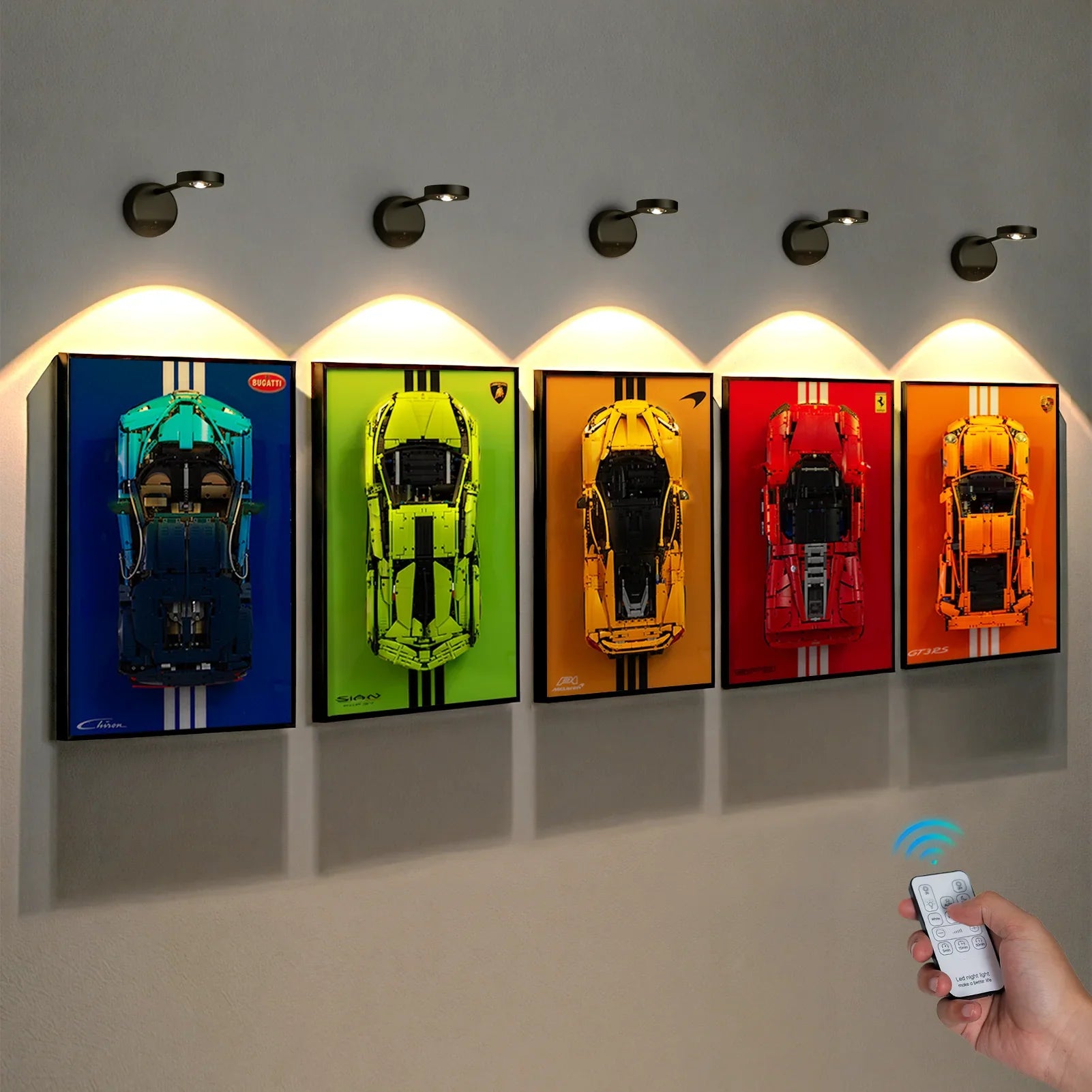


A row of Speed Champions cars may look neat while you arrange them, yet feel messy once you step back to view the whole display. A bright car dominates one end, similar models blur together, and a new addition leaves you rearranging the entire group.
Before buying a LEGO® Speed Champions display frame, decide how you want someone to read the collection. One clear grouping rule makes the lineup easier to maintain as your interests change.
Pick One Grouping Rule for the Whole Frame
Group by manufacturer if comparing different interpretations of a brand is what you enjoy. Group by color if the display needs to relate to a room. Group by series or release period if you want to keep a particular collection together.
Do not switch rules halfway across the same frame without a visible break. A row sorted by manufacturer beside a row sorted by color can leave the arrangement feeling accidental. If both stories matter, choose one for this display and save the other for a future grouping.

Test the Order on a Table First
Set the models on a clear surface in the sequence you intend to use, matching the frame's approved layout orientation. Take a photo from above and compare neighboring cars: two dark models may benefit from a lighter one between them, while a matched pair may read better side by side.
Use this tabletop arrangement to decide the order—not to assume you can reposition the frame's mounting points. A fixed layout may restrict the direction, spacing, or model combinations available.
Match the Lineup to the Actual Product
Count the cars you want to show now, then write down their set numbers. A product described as a ten-car frame establishes capacity, but it does not guarantee compatibility with every small LEGO vehicle ever released.
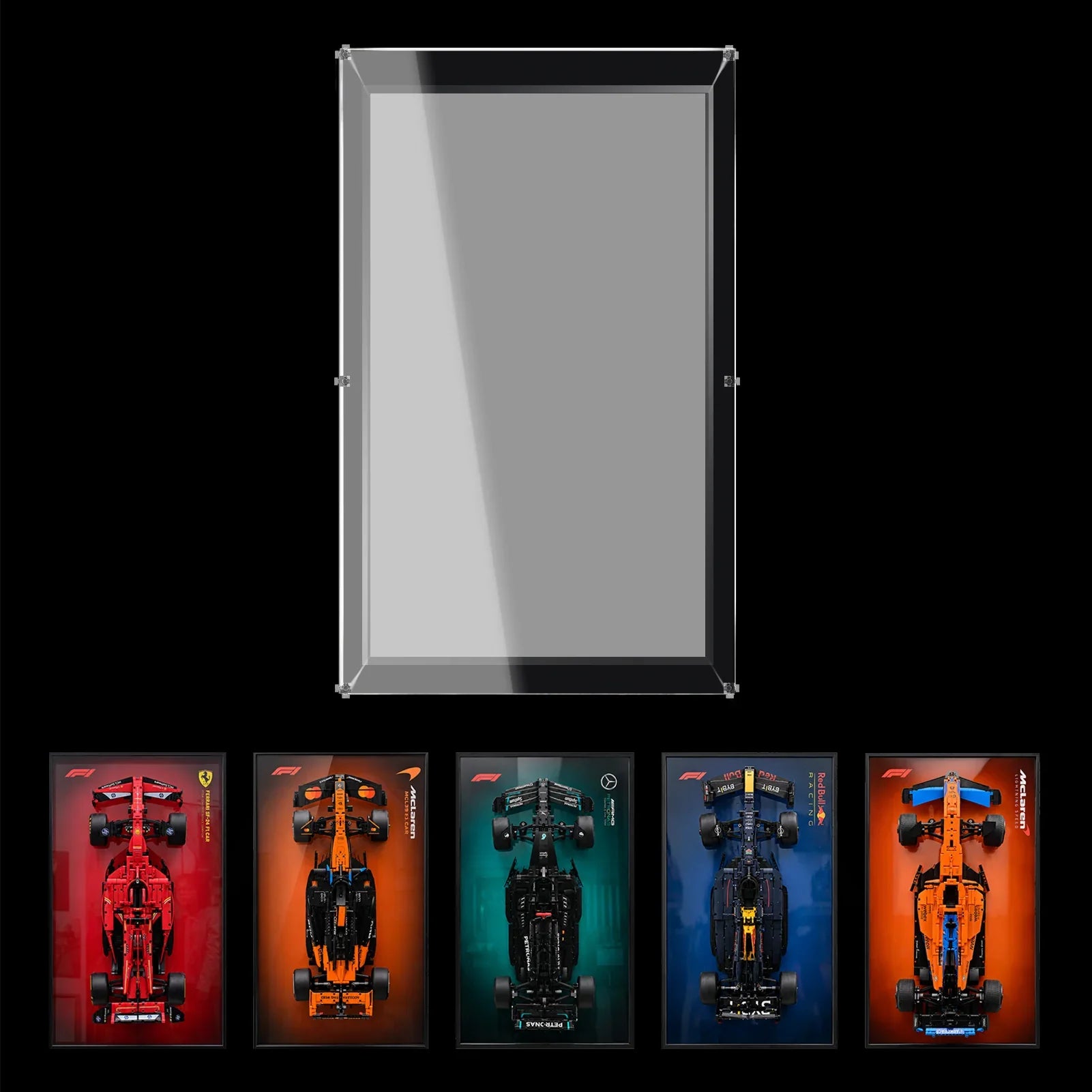
Our Premium Aluminum 10-in-1 F1 Wall Display Frame is designed for a ten-car F1 collection. Compare your set numbers with the selected version and product images before ordering. If a car has an unusual body width or shape, confirm that specific fit instead of assuming another car's position will accept it.
Where the background assigns a particular car to a printed location, let that mapping take priority over your preferred color order. Keep a photograph of the final arrangement so you can return models to the same positions later.

Plan for the Next Car Before It Arrives
For a complete series, keep that frame as a finished group. For an evolving collection, decide which cars belong to the current selection and which will rotate out. Avoid squeezing an extra model between intended positions merely to keep every car together.
If the frame permits an incomplete lineup, distribute empty positions deliberately. If it relies on a complete printed grid, wait for the matching collection or choose a different compatible layout.
Build the lineup first, then choose the frame that supports it. A clear order is easier to preserve than a display assembled one spare gap at a time.
Read a Fixed Background as a Collection Map
Some multi-car frames provide a neutral field; others use printed team colors and graphic positions. Our ten-car F1 frame belongs to the second group. Look at the occupied product photo and the empty-board image together. Identify which areas are artwork and which are actual model locations. A printed racing calendar does not become an extra mounting position simply because it looks like spare space.
For a mixed collection, make a list with one set number per intended position. Add a short note about body width or unusual bodywork only where it matters. This is more useful than describing the collection as "ten small cars." If the mapping cannot be confirmed, choose a compatible arrangement rather than modifying the support layout to preserve a preferred color sequence.

FAQ
Is a ten-car frame compatible with every Speed Champions car?
No. Capacity and compatibility are separate. Ten positions describe the intended lineup size; they do not prove that every body width, wheelbase, or attachment arrangement will work. Match your actual set list to the frame configuration.
Can I organize cars by color instead of team?
Only where the supported layout permits it. If the artwork and mounting positions correspond to particular teams or models, retain that mapping. You can introduce a color-based arrangement elsewhere in the room without rearranging a fitted board.
What if I currently own fewer than ten cars?
An incomplete collection is not automatically a problem, but confirm that the frame works with intended positions empty. Avoid filling gaps with unrelated models merely to complete the pattern. Empty space is preferable to an unsupported substitution.
Does the printed season on the background prove the release year of every car?
No. Treat it as artwork until the product's compatibility information establishes the model list. The date, team names, and set numbers serve different purposes and should not be substituted for one another during selection.
Should I alternate light and dark cars?
That can improve separation in a freely arranged collection, but a fixed product layout takes priority. Evaluate the approved lineup at thumbnail size first. If the whole group feels too busy, simplify the surrounding wall before changing the model positions.
How do I plan for a collection that keeps growing?
Define the current frame as one finished group and reserve a separate area for future additions. This protects the clarity of the original lineup. Recheck compatibility for any future frame instead of assuming a later car series uses the same supports.

